Integrating Bubble Sprout into Your Creative Workflow for Playful Branding
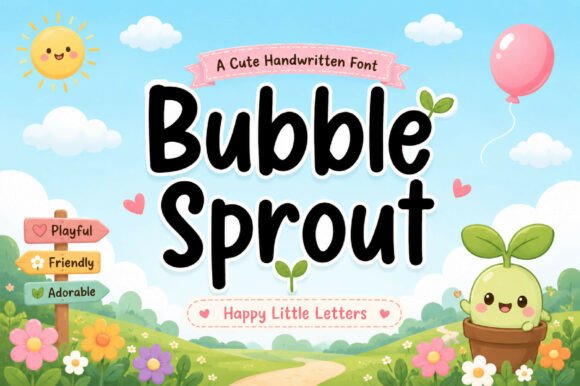
In the modern design landscape, selecting the right typography is often the difference between a project that feels generic and one that resonates deeply with its intended audience. Bubble Sprout stands out as a distinct choice for professionals seeking to inject warmth and approachability into their visual communications. This handwritten display font is not merely a stylistic flourish; it is a functional tool designed to facilitate specific emotional connections through soft curves, rounded shapes, and a cheerful personality. For entrepreneurs, educators, and content creators aged 20 to 50, understanding where this typeface fits within a broader workflow is essential for maximizing its impact.
The core value of Bubble Sprout lies in its ability to balance readability with a unique handmade character. Its bubbly letterforms create a warm atmosphere that instantly adds charm to any design without sacrificing clarity. When you are managing a complex project involving multiple stakeholders or navigating a tight deadline, having a typeface that communicates friendliness at a glance can streamline your decision-making process. Whether you are designing children's products, playful logos, stickers, packaging, posters, greeting cards, or social media graphics, this font brings a bright and happy touch to your typography. The smooth rounded structure makes it easy to read while keeping a distinct identity, ensuring that your message is received exactly as intended.
Strategic Placement in the Design Lifecycle
To utilize Bubble Sprout effectively, one must view it not just as an aesthetic addition but as a strategic asset within the product development or marketing lifecycle. The integration of this font should begin during the initial planning phase. Before a single pixel is placed on a canvas, teams should evaluate whether the project requires a tone that is cute, youthful, and creative. If the goal is to humanize a brand or make a service feel less corporate, Bubble Sprout serves as an immediate signal to the consumer.
During the execution phase, the font interacts heavily with other design assets. Because of its casual hand-drawn style, it pairs exceptionally well with minimalist layouts or vibrant color palettes. However, consistency is key. When working on a multi-page document or a series of social media posts, using Bubble Sprout ensures that the visual voice remains consistent across all touchpoints. This consistency builds trust. For example, if a small business owner is creating a set of promotional materials, maintaining the use of this font from the email header to the physical flyer reinforces brand recognition. The font acts as a unifying element that ties disparate assets together into a cohesive narrative.
Pre-Production Considerations and Compatibility
Before diving into the creation process, practical considerations regarding compatibility and file management are crucial. Professionals need to ensure that Bubble Sprout is installed correctly on their systems and compatible with the software they use daily, such as Adobe Illustrator, Canva, or Figma. In a collaborative environment, sharing font files or embedding them correctly prevents rendering issues when handing off projects to clients or printing partners. A common pitfall in digital workflows is assuming a font will appear the same on all devices; verifying that the rounded structures of Bubble Sprout render smoothly on both high-resolution screens and standard print outputs is a vital quality control step.
Furthermore, preparation involves defining the scope of usage. Since the font is designed for display purposes, it is most effective when used for headlines, titles, and short phrases rather than long blocks of body text. Understanding this limitation early in the workflow saves time during the editing phase. It allows designers to focus their energy on pairing Bubble Sprout with complementary sans-serif or serif fonts that provide structure, ensuring the final output looks polished rather than chaotic. This thoughtful selection of type combinations demonstrates a mature approach to design planning.
Application Across Diverse Business Workflows
The versatility of Bubble Sprout extends across various professional domains, each requiring a slightly different implementation strategy. For marketers and bloggers, the font offers a quick way to capture attention in crowded digital feeds. Social media graphics benefit immensely from the cheerful personality of the typeface, which encourages engagement and shares. When creating a campaign for a new product launch, using Bubble Sprout for the main headline can differentiate the ad from competitors who rely on sterile, geometric typefaces.
- Educational Materials: Teachers and curriculum developers can use this font to make learning resources feel less intimidating. Worksheets, flashcards, and classroom posters created with Bubble Sprout help lower the anxiety barrier for young learners, making education feel more inviting.
- Product Packaging: For small business owners launching food items, toys, or craft supplies, the font adds a tactile quality to packaging. It suggests that the product inside is made with care and has a personal touch, which is a powerful selling point in today's market.
- Greeting Cards and Invitations: In the realm of event planning and personal branding, Bubble Sprout excels at conveying emotion. Whether for a birthday party or a community workshop invitation, the rounded shapes mimic the natural flow of handwriting, adding a layer of intimacy that machine-generated fonts often lack.
In these scenarios, the font does not just decorate; it facilitates communication. It bridges the gap between the creator and the audience by signaling that the content is accessible and fun. This is particularly relevant for freelancers and hobbyists who want to establish a personal brand that feels authentic and relatable.
Optimizing for Print and Digital Environments
One of the standout features of Bubble Sprout is its dual capability for both print and digital designs. However, optimizing for each medium requires specific attention to detail. In digital environments, the smooth rounded structure ensures that the text remains legible even at smaller sizes on mobile devices. When integrating this font into websites or email newsletters, designers should pay attention to line height and spacing. The playful nature of the letters can sometimes lead to crowding if not managed carefully, so generous whitespace is recommended to let the characters breathe.
For print applications, the focus shifts to resolution and ink coverage. Because the font features thick, bubbly strokes, it is important to test how these areas hold up when printed on different paper stocks. High-quality printing can enhance the soft curves, giving the design a premium feel despite the casual style. Conversely, low-resolution printing might blur the rounded edges, diminishing the "handmade" effect. By conducting proofing tests before mass production, professionals can ensure that the final product maintains the integrity of the Bubble Sprout design. This proactive approach to quality control reflects a commitment to excellence and efficiency.
Long-Term Integration and Consistency
Sustainable design practices involve thinking beyond the immediate project. Integrating Bubble Sprout into a long-term workflow means establishing guidelines for its future use. For organizations or individuals building a library of assets, creating a style guide that defines when and how to use this font is beneficial. This ensures that every piece of content produced over months or years retains a consistent voice. Without such guidelines, there is a risk of overusing the font or applying it in contexts where it clashes with the desired brand image.
Additionally, the font's unique character makes it a valuable asset for rebranding efforts. If a business decides to shift its tone to be more friendly and community-focused, introducing Bubble Sprout can be a strategic move to visually communicate this change. It acts as a catalyst for transformation, helping to align the visual identity with new business goals. For productivity-minded users, having a reliable, versatile font like this reduces the cognitive load associated with choosing typefaces, allowing more time to focus on content strategy and execution.
Ultimately, the success of Bubble Sprout in any project depends on how well it is integrated into the overall design ecosystem. It is not a standalone solution but a component that works best when paired with thoughtful planning and execution. By understanding its strengths—soft curves, rounded shapes, and a cheerful personality—and applying them within a structured workflow, designers can create work that is not only visually appealing but also functionally effective. Whether you are crafting a logo for a startup or designing a poster for a local event, this font provides the foundation for a bright and happy touch that resonates with people on a fundamental level.
In conclusion, adopting Bubble Sprout requires a balance of creativity and discipline. It demands that the user considers the context, the audience, and the medium before deployment. When approached with this level of intentionality, the font becomes more than just a decorative element; it transforms into a powerful tool for connection. As the digital and physical worlds continue to merge, the need for typography that feels human and approachable will only grow. Bubble Sprout offers a practical, efficient, and charming solution for those looking to elevate their design process and deliver results that truly stand out.