Clusi: The Bold Statement Font for Designers Who Dare to Stand Out
In a digital landscape saturated with generic sans-serifs and predictable serif pairings, finding a typeface that instantly commands attention can feel like searching for a needle in a haystack. Enter Clusi, a stunning decorative display font designed specifically to be the center of attention. This isn't just another letterform; it is a tool for creators who want to break away from the ordinary and inject a strong visual personality into their projects. Whether you are crafting a brand identity or designing a high-impact poster, Clusi offers a unique artistic flair that transforms standard text into a work of art.
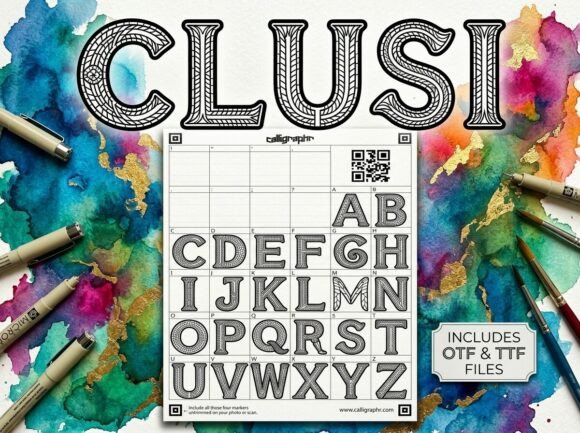
The core philosophy behind Clusi is simplicity through impact. It strips away the need for complex kerning adjustments or intricate ligatures found in traditional script fonts, focusing instead on a singular, powerful aesthetic. Because it is an all-caps uppercase-only display typeface, every letter is treated as a decorative element. This design choice forces the user to think differently about hierarchy and spacing, resulting in headlines and logos that feel intentional, polished, and undeniably professional.
Where Clusi Shines: Real-World Applications
Understanding the theoretical features of a font is one thing, but knowing where it actually works in the wild is what separates good designers from great ones. Clusi is versatile enough to handle a wide range of industries, provided the context calls for boldness and drama. Here are several scenarios where this typeface proves its worth.
- Event Branding and Posters: Imagine a music festival, a gallery opening, or a high-end fashion show. These events rely on immediate visual hooks to draw people in. Clusi's unique artistic elements make it perfect for large-format posters where the headline needs to be readable from a distance yet detailed enough to hold interest up close. The uppercase restriction ensures that the message remains punchy and uncluttered.
- Creative Packaging and Product Labels: In retail, products often compete for a split-second of attention on a crowded shelf. A cosmetic brand launching a limited-edition perfume or a craft brewery releasing a seasonal stout can use Clusi to create packaging that feels bespoke. The font's polished finish elevates the perceived value of the product, making it look artisanal rather than mass-produced.
- Editorial Headlines and Magazine Covers: Editors love fonts that tell a story before the reader even opens the issue. Clusi works exceptionally well for feature stories that require a touch of mystery or elegance. Its decorative nature adds texture to a page without overwhelming the accompanying imagery, allowing the typography to act as a frame for the content.
- Logo Design for Creative Agencies: For branding consultants and freelance designers, creating a memorable logo is paramount. Clusi provides a strong foundation for wordmarks where the name itself is the graphic. Because it lacks lowercase letters, the uniformity of the cap height creates a solid block of color and shape, which is ideal for iconography and emblem-based logos.
Who Benefits Most from Clusi?
Different users find different strengths in this typeface depending on their specific goals. Graphic designers looking to expand their toolkit will appreciate the versatility of the included file formats. When you purchase Clusi, you receive both an OTF (OpenType Font) and a TTF (TrueType Font). The OTF file is the professional standard, offering advanced layout capabilities for software like Adobe Illustrator, InDesign, and Photoshop. This allows for precise control over kerning and stylistic alternates if your workflow requires it. Meanwhile, the TTF file ensures universal compatibility across all devices and operating systems, making it easy to share files with clients who might not have access to the latest design suites.
Beyond designers, small business owners and entrepreneurs can leverage Clusi to elevate their marketing materials without hiring expensive agencies. A local coffee shop owner could use Clusi for daily specials boards or loyalty card designs, instantly giving their brand a more sophisticated and curated look. Similarly, event planners can use it for invitations and signage, ensuring that the visual tone matches the exclusivity of the occasion.
Navigating Limitations: What You Need to Know
While Clusi is a powerhouse for display purposes, it comes with a specific set of constraints that must be understood before purchasing. The most critical factor is its ALL-CAPS Uppercase Only nature. There are no lowercase letters included in the font family. This is not a bug; it is a deliberate design feature intended to maintain the integrity of the artistic elements within each character.
This limitation means Clusi is strictly a display typeface. It is not suitable for body copy, long-form articles, or paragraphs of text. Trying to force Clusi into a sentence structure will result in a jarring, difficult-to-read experience that undermines the professional finish the font is known for. Instead, view it as a headline engine. Pair it with a clean, neutral sans-serif or a classic serif for any supporting text. This contrast highlights the decorative nature of Clusi while maintaining readability for the audience.
Another consideration is the "high-impact" requirement. Because every letter is a work of art, Clusi demands space. Crowding these characters together can obscure the unique details that make the font special. Users should be prepared to experiment with generous leading and tracking to let the letters breathe. This is particularly important when using Clusi for logos; the negative space around the text is just as important as the glyphs themselves.
Practical Tips for Implementation
To get the most out of Clusi, consider how you integrate it into your existing workflows. If you are working on a project that requires a mix of styles, use Clusi sparingly. Let it be the star of the show rather than the supporting actor. For instance, in a brochure layout, use Clusi for the main title and section headers, but switch to a highly legible font for the body text. This approach maintains the professional polish while ensuring the information is accessible.
When creating artistic logos, focus on the initial letters. Since Clusi is designed for decorative initials, you can play with sizing and placement to create monograms or custom symbols. The strong visual personality of the font allows it to stand alone effectively, making it an excellent choice for brands that want to convey confidence and creativity.
Ultimately, Clusi is a resource for those who refuse to settle for the mundane. It bridges the gap between functional typography and pure art, offering a solution for anyone looking to add a touch of elegance and boldness to their creative output. By understanding its strengths and respecting its limitations, you can unlock a new level of visual storytelling in your designs.