Isabelle Font Evaluation
The visual landscape of design is often defined by the tension between modern minimalism and historical complexity. For projects that require a distinct sense of lineage, mystique, or intricate craftsmanship, standard geometric sans-serifs or humanist serifs may fall short in conveying the necessary depth. This is where Isabelle enters the conversation as a specialized tool for designers seeking to anchor their work in ancient tradition. Isabelle is not merely a typeface; it is a digital reconstruction of insular art, specifically designed to evoke the spiritual continuity and interlacing patterns found in medieval manuscripts.
This evaluation explores the functional capabilities, aesthetic characteristics, and strategic applications of the Isabelle font family. By examining its structural DNA and comparing it against alternative approaches, designers can determine if this specific display solution aligns with their project requirements.
Understanding the Design Philosophy
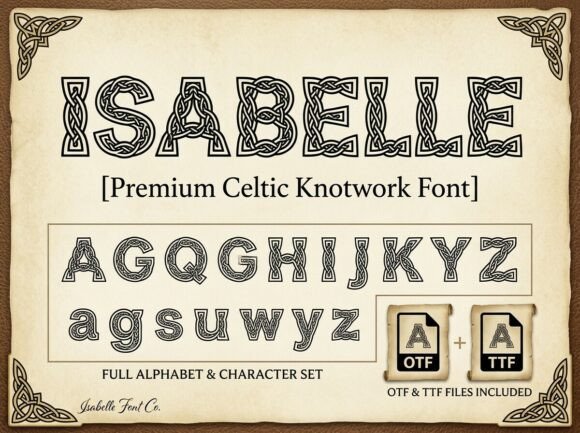
At its core, Isabelle is a premium display font inspired by the rich heritage of Celtic knotwork. Unlike traditional serif or sans-serif fonts that rely on distinct strokes and terminals, every letterform in this typeface is meticulously woven from continuous, interlacing lines. The design draws heavily from traditional insular art, a style characterized by complex spirals, triskelion-inspired knots, and an absence of clear beginning or end points within the forms.
This approach creates a unique typographic texture. When set, the letters do not sit passively on the baseline; they appear to be constructed from a single, unbroken thread. This gives the text a tactile quality, suggesting physical craftsmanship even when viewed on a screen. The font captures the essence of ancient heritage, making it particularly effective for contexts where history and folklore are central themes. It transforms simple typography into an ornamental element, blurring the line between text and image.
The Premium Variant: Isabelle Premium
The Isabelle Premium edition typically offers an expanded character set and enhanced ligatures compared to standard versions. In the context of Celtic knotwork, the availability of alternate glyphs is crucial. A designer might need a specific variation of the letter "S" or "O" to ensure the interlacing pattern flows logically without breaking the visual rhythm. The premium version provides these nuances, allowing for more sophisticated typesetting where the continuity of the line is preserved across word boundaries. This attention to detail supports high-end branding where consistency and exclusivity are paramount.
Strategic Applications and Use Cases
Selecting a font requires matching the visual language of the typeface to the intent of the communication. Isabelle excels in scenarios where the goal is to evoke a specific atmosphere rather than simply convey information efficiently. Its strength lies in its ability to function as both text and graphic.
- Heritage Branding: Companies wishing to position themselves as custodians of tradition, such as distilleries, artisanal crafters, or genealogy services, find value in the font's connection to history. The intricate nature of the letters suggests longevity and careful attention to detail.
- Fantasy Literature: For novel covers, particularly those involving mythology, magic, or ancient civilizations, Isabelle provides an immediate contextual cue. It signals to the reader that the content involves a world steeped in lore and mystery.
- Jewelry Packaging: High-end jewelry brands often utilize the font for packaging labels and certificates of authenticity. The interlacing lines mirror the metalwork of Celtic rings and brooches, creating a cohesive brand experience that feels luxurious and handcrafted.
- Cultural Festival Signage: Events celebrating Irish heritage, Viking history, or general folklore benefit from the font's thematic resonance. It helps establish an immersive environment for attendees before they even enter the venue.
Evaluating Benefits and Tradeoffs
While Isabelle offers a powerful visual identity, it comes with inherent limitations that must be considered during the selection process. Understanding these tradeoffs is essential for avoiding common pitfalls in typography.
The primary benefit of using Isabelle is its distinctiveness. In a market saturated with generic typefaces, a font based on Celtic knotwork stands out immediately. It commands attention and sets a tone that is difficult to replicate with other tools. Furthermore, the font serves as a strong narrative device. It tells a story of continuity and interconnectedness, which can subtly reinforce brand values regarding community, history, or unity.
However, the tradeoff lies primarily in readability and legibility. Because the letterforms are composed of continuous, weaving lines, small sizes can cause the details to blur. At body text sizes, the intricate knots may become visually noisy, leading to eye strain for the reader. Consequently, Isabelle is generally unsuitable for long-form content, technical manuals, or user interface elements where clarity is the priority. It is strictly a display font, best reserved for headlines, titles, and short slogans.
Another consideration is versatility. While the font is excellent for thematic projects, it lacks the neutrality required for corporate communications, news media, or educational materials. Using it in a context unrelated to history or fantasy can result in a jarring disconnect between the message and the medium. Additionally, the complexity of the design means that kerning (the spacing between letters) must be handled with care. Automated kerning pairs may not account for the specific flow of the knots, requiring manual adjustment for professional results.
Decision-Making Framework
To determine if Isabelle is the right choice for a specific project, designers should evaluate the following criteria:
- Project Scope: Is the project focused on headlines, logos, or cover art? If yes, Isabelle is a strong candidate. If the project requires extensive body copy, consider a complementary simpler font for the main text.
- Audience Expectations: Does the target audience appreciate historical aesthetics and intricate design? If the audience expects modern efficiency and speed, this font may create unnecessary friction.
- Brand Alignment: Does the brand identity support the themes of heritage, spirituality, or craftsmanship? If the brand is tech-focused or minimalist, Isabelle may clash with the established visual voice.
- Technical Constraints: Will the font be used at very small sizes or on low-resolution screens? If so, the fine details of the knotwork may not render effectively, necessitating a different option.
Considering Alternatives
If the specific constraints of Isabelle do not align with the project needs, several alternatives exist. For projects requiring a similar historical feel but with better readability, designers might look toward Old English or Gothic style fonts, which offer a medieval aesthetic with clearer letter separation. For a more subtle nod to Celtic culture without the overwhelming intricacy, script fonts with calligraphic influences can provide a sense of tradition while maintaining legibility.
In cases where the goal is simply to convey a "fantasy" or "mystical" vibe without the specific cultural baggage of Celtic knotwork, custom illustrated lettering or bespoke logotypes might offer greater flexibility. These options allow for complete control over the shape of each character, ensuring that the design fits the specific layout without the rigid structure of a pre-made font family.
Final Assessment
Isabelle is a specialized asset that delivers exceptional results when applied correctly. It is a powerhouse for projects that celebrate history, folklore, and intricate craftsmanship. However, it is not a universal solution. Its success depends on the designer's ability to respect its limitations regarding size and context. When used for heritage branding, fantasy titles, jewelry packaging, or cultural signage, it elevates the visual identity with a sense of ancient weight and spiritual continuity. For projects outside these parameters, a more neutral typeface remains the prudent choice.
Ultimately, the decision to use Isabelle should be driven by the narrative goals of the project. If the story being told is one of deep roots and interconnected history, this font provides the perfect vessel for that message. By weighing its ornate beauty against its functional constraints, designers can make an informed choice that enhances rather than hinders their communication.