Crayon: A Strategic Approach to High-Impact Typography
In a digital landscape saturated with generic sans-serifs and standard serifs, Crayon emerges not merely as a typeface but as a deliberate strategic asset. Designed for creators who refuse to settle for the ordinary, this decorative display font possesses a unique artistic personality that demands attention. However, the decision to integrate Crayon into your professional workflow requires more than aesthetic appreciation; it necessitates a clear understanding of its capabilities, limitations, and the specific outcomes it can drive.
For entrepreneurs, marketers, and designers aged 20 to 50, typography is rarely just about readability. It is a critical component of brand positioning, customer experience, and operational efficiency. When used intentionally, Crayon transforms standard headlines into memorable visual anchors. Yet, its power lies in restraint. This guide explores how to leverage this all-caps uppercase-only display typeface to achieve better results without compromising professional polish or long-term brand equity.
The Strategic Value of Visual Distinction
The primary challenge facing modern businesses is attention scarcity. Audiences are bombarded with thousands of messages daily, often filtering out content that looks indistinguishable from the rest. Crayon addresses this directly by offering a strong visual personality that breaks through the noise. Its unique artistic elements function as a psychological trigger, signaling creativity, boldness, and a departure from the mundane.
From a branding perspective, using Crayon allows you to establish a distinct market position. Whether you are launching a new product, rebranding a service, or creating a campaign for a creative agency, the font acts as a differentiator. It signals to your audience that you value innovation and artistic integrity. However, this distinction must be grounded in strategy. If your goal is to convey stability and trustworthiness in the financial sector, a heavy-handed use of Crayon might undermine your credibility. Conversely, for lifestyle brands, educational platforms, or creative portfolios, the font's character aligns perfectly with the desired narrative.
The key to success is alignment. Before deploying Crayon, ask yourself: Does this font reflect our core values? Does it support the message we are trying to communicate? If the answer is yes, the font becomes a tool for amplification rather than decoration.
Understanding the All-Caps Constraint
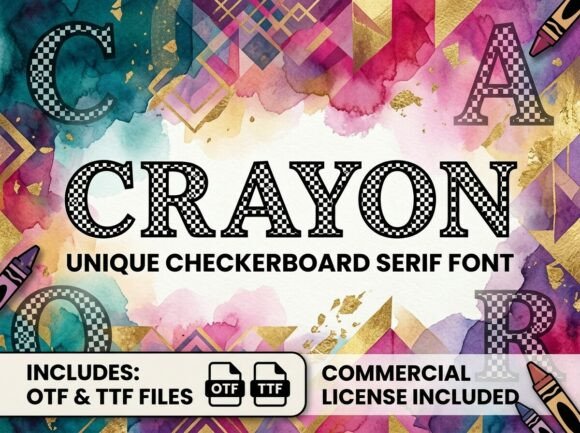
A critical factor in making an informed decision regarding Crayon is understanding its structural limitation: it is an all-caps uppercase-only display typeface. Unlike versatile text fonts that include lowercase letters, Crayon does not offer lowercase variants. This is not a defect but a design choice intended for high-impact applications.
This constraint forces a shift in planning. You cannot use Crayon for body copy, long-form articles, or detailed instructions where legibility over extended reading periods is paramount. Instead, it is engineered for moments where brevity and impact are the priorities. Think of it as a spotlight rather than a floodlight. It illuminates specific areas of your design—headlines, logos, packaging, and decorative initials—where every letter serves as a work of art.
Decision-makers must recognize that this limitation actually enhances the font's utility. By restricting its use to short phrases, you ensure that the audience focuses on the message without being overwhelmed by the decorative nature of the type. This discipline prevents the common pitfall of "design fatigue," where too much visual flair dilutes the core communication.
Practical Applications for Business and Creativity
To maximize the return on investment for this font, it should be integrated into specific areas of your operations where visual hierarchy and emotional connection are vital. Here are strategic use cases that demonstrate how Crayon can support your goals.
- Bold Headlines and Marketing Campaigns: In email marketing, social media ads, or landing pages, Crayon can serve as the hook. Its uppercase structure creates a commanding presence that stops the scroll. Use it for campaign slogans or event titles to create immediate excitement and anticipation.
- Artistic Logos and Brand Identity: For small business owners and freelancers, a logo needs to be memorable. Crayon offers the perfect canvas for initial-based logos or stylized brand names. The artistic elements add a layer of sophistication that standard fonts lack, helping to elevate a startup from "generic" to "established."
- Creative Packaging and Merchandise: In the physical world, packaging is a tactile experience. Using Crayon on product labels, stickers, or promotional materials can turn a commodity into a collectible item. The font's decorative nature adds perceived value to the product, influencing purchasing decisions at the point of sale.
- Educational Materials and Workshops: Educators and trainers can utilize Crayon for presentation slides, course covers, or workshop signage. It helps break the monotony of standard educational content, keeping learners engaged and signaling that the material is fresh and innovative.
Each of these applications requires a thoughtful approach. The goal is not to use the font everywhere, but to use it where it matters most. This targeted strategy ensures that your resources are allocated efficiently, yielding higher engagement rates and better long-term results.
File Compatibility and Technical Implementation
One of the practical advantages of acquiring Crayon is the comprehensive file package provided. You receive both OTF (OpenType Font) and TTF (TrueType Font) files, ensuring flexibility across different workflows and devices.
The OTF file is the professional standard, ideal for advanced design software like Adobe Illustrator, InDesign, or Affinity Designer. It supports advanced layout features that allow for precise control over kerning and spacing, which is essential when working with decorative typefaces where the interaction between letters is crucial. For professionals managing complex projects, this level of control ensures a polished finish that reflects well on the brand.
The TTF file offers universal compatibility, making it accessible for users working in web environments, older operating systems, or basic design tools. This dual-format delivery means that whether you are a seasoned graphic designer or a freelancer using cloud-based tools, you have the necessary assets to execute your vision without technical hurdles. This accessibility reduces friction in the production process, allowing you to focus on strategy and creativity.
Risks and Considerations for Long-Term Success
While Crayon is a powerful tool, relying on it without a clear context can lead to negative outcomes. The most significant risk is the perception of amateurism. Decorative fonts, by their nature, draw attention to themselves. If overused or applied to inappropriate contexts, they can appear chaotic or unprofessional.
Consider the following pitfalls before integrating Crayon into your brand identity:
- Lack of Hierarchy: If every headline uses Crayon, nothing stands out. You must reserve it for primary messages only. Secondary information should remain in neutral, highly readable fonts to maintain clarity.
- Readability Issues: Because Crayon is all-caps and decorative, it can be difficult to read quickly. Avoid using it for navigation menus, legal disclaimers, or instructional text where speed and accuracy are required.
- Brand Dilution: Consistency is key to building trust. If you switch between Crayon and other decorative fonts arbitrarily, your brand will lose its cohesive voice. Develop a style guide that defines exactly when and how Crayon is used.
To mitigate these risks, adopt a disciplined approach. Treat Crayon as a special occasion garment rather than everyday wear. It should be worn when you want to make a statement, not when you need to blend in. This intentionality demonstrates maturity in your design thinking and reinforces your authority as a decision-maker.
Making the Decision: A Checklist for Creators
Before purchasing or downloading Crayon, evaluate your current project against these criteria to ensure it is the right fit:
- Goal Alignment: Is the primary goal to grab attention and evoke emotion?
- Content Length: Will the text be short enough to maintain impact without sacrificing readability?
- Target Audience: Does your audience appreciate artistic expression and bold visuals?
- Platform Constraints: Are you using software that supports OpenType features for the best rendering?
If you can answer "yes" to these questions, Crayon is likely a strategic addition to your toolkit. It offers the versatility needed for bold headlines, artistic logos, and creative packaging while maintaining the professional finish required for serious business applications.
Conclusion: Intentional Design for Better Results
Typography is a silent ambassador for your brand. Choosing Crayon is a commitment to standing out, but it is also a responsibility to use that uniqueness wisely. By understanding its all-caps nature, leveraging its high-impact potential, and avoiding common pitfalls, you can transform this font from a mere visual element into a catalyst for growth and recognition.
Whether you are an entrepreneur launching a new venture, a marketer crafting a campaign, or a creator seeking to express your unique voice, Crayon provides the foundation for designs that resonate. Remember, the best design is not always the loudest; it is the one that communicates clearly and effectively. With Crayon, you have the tools to do exactly that, provided you approach it with the same strategic rigor you apply to every other aspect of your business.