Merrill: The Definitive Guide to Art Deco Luxury Typography
In the world of visual communication, few eras capture the imagination quite like the 1920s. It was a time defined by jazz, prohibition, and an unapologetic embrace of opulence. For modern designers and business owners seeking to evoke that specific era of Great Gatsby-style glamour, finding the right typographic voice is often the most critical step in the creative process. This is where Merrill steps onto the stage. More than just a font, Merrill represents a masterclass in geometric precision and architectural elegance, offering a bridge between historical aesthetics and contemporary design needs.
Understanding the Essence of Merrill
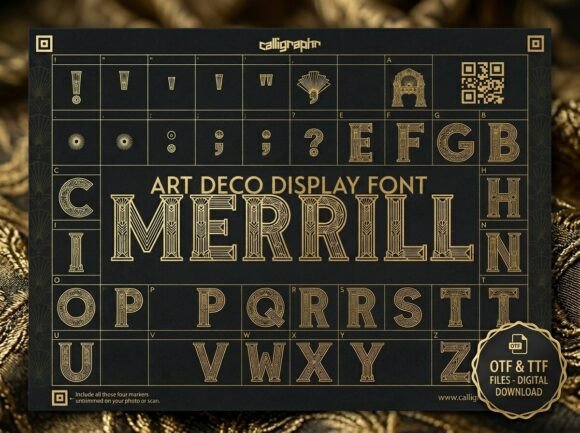
To truly appreciate the utility of Merrill, one must first understand what it brings to the table beyond mere decoration. At its core, this premium Art Deco typeface is built on the principles of the Roaring Twenties. It features intricate geometric patterns that are not merely superficial but are structurally integrated into the letterforms themselves. When you look at a headline set in Merrill, you are seeing the result of meticulous attention to detail, where every curve and angle serves a purpose.
The font distinguishes itself through its use of architectural gold linework. Unlike many decorative fonts that can appear cluttered or difficult to read when scaled down, Merrill maintains a balance between ornate styling and legibility. The classic sunburst motifs, a hallmark of the Art Deco movement, are woven seamlessly into the design. These elements do not distract from the text; rather, they elevate it, turning a simple word into a statement of timeless opulence. Whether used for a high-end spirit label or a boutique hotel branding package, Merrill ensures that the message carries weight and authority.
The Visual Language of Opulence
The sophistication of Merrill lies in its color palette potential. While the font itself is vector-based, it is designed with a specific visual language in mind: a sophisticated black-and-gold scheme. This combination has been synonymous with luxury for decades, yet Merrill manages to feel fresh rather than dated. The sharp lines contrast beautifully against deep blacks, while the implied "gold" effect created by the linework catches the eye without overwhelming the viewer.
This visual approach makes it particularly effective for projects where the brand identity needs to communicate exclusivity immediately. In a crowded marketplace, the difference between a standard sans-serif and a font like Merrill can be the deciding factor in capturing a consumer's attention. It signals to the audience that the product or service behind the text is premium, curated, and worthy of their investment.
Practical Applications Across Industries
While the aesthetic appeal of Merrill is undeniable, its true value is realized in how it is applied across various sectors. Designers and business owners often struggle to find a typeface that balances thematic relevance with professional credibility. Merrill solves this problem by offering versatility within a specific niche. Below are several key areas where this font shines:
- Luxury Event Invitations: For weddings, galas, or corporate mixers themed around the 1920s, Merrill provides the perfect tone. It transforms a standard invitation into a keepsake, setting expectations for an evening of elegance before the event even begins.
- High-End Spirit Labels: The whiskey and cocktail industry relies heavily on heritage and storytelling. A bottle of premium bourbon or a craft gin benefits immensely from the architectural strength of Merrill, which suggests craftsmanship and age.
- Boutique Hotel Branding: Hotels aiming to create a distinct atmosphere often turn to period-specific design. Merrill can be used for signage, room keys, and marketing materials to instantly transport guests to a different time and place.
- Roaring Twenties Themed Parties: From private clubs to large-scale productions, the font acts as a visual anchor that ties all design elements together, ensuring consistency in costumes, decor, and promotional material.
Real-World Scenarios for Implementation
Consider a scenario where a new speakeasy is opening in a major metropolitan city. The owner wants to avoid the cliché of overused flapper imagery and instead focus on a more mature, sophisticated vibe. By using Merrill for the menu headers and the exterior signage, the establishment communicates a sense of history and exclusivity. The intricate details of the font invite patrons to lean in and read, creating a more intimate engagement with the brand.
Similarly, a luxury real estate developer might use Merrill for a brochure promoting a historic renovation project. The font's connection to the architecture of the past reinforces the narrative of restoring grandeur to a modern space. In these instances, the font is not just a stylistic choice; it is a strategic tool that aligns the visual identity with the desired emotional response from the customer.
Evaluating Suitability and Limitations
Despite its strengths, Merrill is not a universal solution for every design challenge. Understanding its limitations is just as important as recognizing its capabilities. Because of its highly decorative nature, it is best suited for headlines, logos, and short phrases rather than body text. Attempting to set long paragraphs in Merrill can lead to visual fatigue and reduced readability, which defeats the purpose of clear communication.
Designers should also consider the context of the medium. On small mobile screens, the intricate geometric patterns and fine linework may become illegible if the font size is too small. In such cases, it is advisable to pair Merrill with a clean, neutral sans-serif font for secondary information. This pairing allows the decorative elements of Merrill to stand out while maintaining the functional clarity required for digital consumption.
- Readability Check: Always test your designs at actual sizes before finalizing. Ensure that the details of the font do not blur or merge when printed on smaller formats.
- Brand Consistency: Ensure that the luxurious feel of Merrill aligns with the rest of your brand identity. If other elements of your brand are minimalist or industrial, Merrill might feel disjointed unless carefully balanced.
- Color Contrast: To fully appreciate the architectural linework, ensure there is sufficient contrast between the text and the background. Low-contrast applications can wash out the intricate details that make Merrill special.
Guidance for Creators and Professionals
For creators looking to incorporate Merrill into their workflow, the key is intentionality. Do not use the font simply because it looks fancy; use it because it tells a story. Ask yourself what emotion you want to evoke in your audience. If the goal is to convey warmth, friendliness, or approachability, Merrill may be too formal. However, if the objective is to establish authority, luxury, and a connection to a golden age of style, then it is an ideal choice.
When evaluating whether to license this typeface, consider the longevity of the project. Art Deco is a timeless style, meaning designs featuring Merrill are less likely to look outdated in a few years compared to trends that come and go quickly. This makes it a sound investment for brands planning to build a lasting legacy.
Conclusion: A Statement of Timeless Style
In conclusion, Merrill stands out as a premier option for anyone looking to infuse their work with the glamour of the 1920s. Its unique blend of geometric patterns, architectural linework, and sunburst motifs offers a level of sophistication that is hard to replicate with generic fonts. Whether you are designing an invitation for a high-society gala, labeling a premium spirit, or rebranding a boutique hotel, Merrill provides the tools necessary to create a visual experience that resonates with audiences seeking quality and elegance.
By understanding both the power and the constraints of this typeface, professionals can leverage its full potential to create designs that are not only beautiful but also effective. In a digital landscape often dominated by minimalism, Merrill reminds us that there is still immense value in ornamentation, history, and the bold declaration of luxury. It turns every headline into a promise of excellence, proving that good design is indeed a timeless art form.